Across the years your eyes meet mine
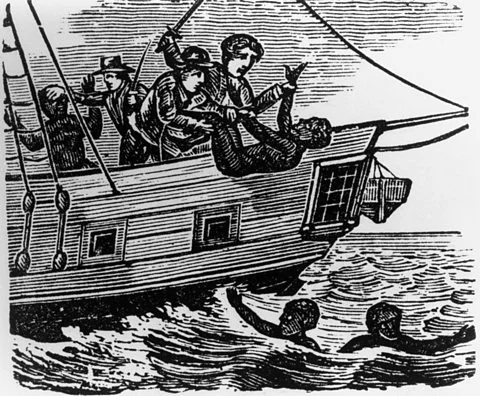
Have you ever heard of the Zong Massacre of 1781?
I didn’t learn about it until I watched the 2013 film by Amma Assante, Belle. I think I stumbled on the film by chance on TV one night. The Zong massacre was a central plot point of the film, and I was awestruck that this was the first time I learnt about such a significant tragedy. It is true that so much of our history has not been told.
The Zong ship left West Africa (modern day Ghana) destined for the Caribbean with 470 enslaved persons tightly packed on the ship. Along the arduous journey some of the enslaved Africans became sick and died. However, the crew also murdered 132 enslaved persons by throwing them overboard with full knowledge that the ship owners can lay an insurance claim over their loss.
They did so when the ship arrived in Jamaica. Their loss was characterised as loss of property hence the insurance claim.
Many things struck me upon learning of the Zong Massacre. It is one thing to consider one’s ancestors being treated as property. This is the core element of chattel slavery. It is quite another to realise that the entire system i.e. every link in the supply chain is incentivised to profit from the dehumanisation and indignities suffered by the enslaved and lastly, how many other Zong massacres have occurred that went unrecorded by history.
Great Britain’s Solicitor General’s Justice John Lee refused any criminal charges against the captain, crew and owners of the Zong because in his words:
What is this claim that human people have been thrown overboard? This is a case of chattels or goods. Blacks are goods and property; it is madness to accuse these well-serving honourable men of murder… The case is the same as if wood had been thrown overboard.”
6th Sept 2026 marks the anniversary of the Zong ship departing West Africa with 470 souls for Jamaica. Not property, souls.
Today, a delegation from Jamaica led by Minister of Culture, Gender, Entertainment and Sport Olivia Grange will petition King Charles III in his capacity as Head of State of Jamaica to request legal advice from the Privy Council. The three key questions to be posed are 1) Was the enslavement of Africans in Jamaica lawful at the time? 2) If it constituted a Crime against Humanity and 3) Does Britain have an obligation to provide restitution to Jamaica for its consequences?
A landmark petition in the global movement for reparatory justice comes full circle and in this season of erasure this is a defiant step towards reclaiming our stories and redefining our futures.
Ancestor on the auction block, across the years your eyes meet mine compelling me to look. – Vera Bell